Diana Capstick
Diana Capstick is a multi-disciplined artist based in Suffolk. She studied Foundation and Diploma courses in Fashion and Textile Design at Great Yarmouth College of Art and Design, now part of Norwich University of the Arts.
Earlier in her career, she spent six years as Artist in Residence at the British Embassy in Paris, where she created large-scale floral installations and worked alongside artists and designers including Vivienne Westwood, as well as companies such as Osborne and Little.
Diana has exhibited widely in the UK and internationally through both solo and group exhibitions.
She later contributed to Illustration: A Theoretical and Contextual Perspective, published by Bloomsbury in 2024, following a commission from Professor Alan Male. In 2025, she completed an MA in Fine Art at Falmouth University.
Alongside her studio practice, Diana is an artist and educator with a particular interest in community art and working with neurodiverse individuals and young people.
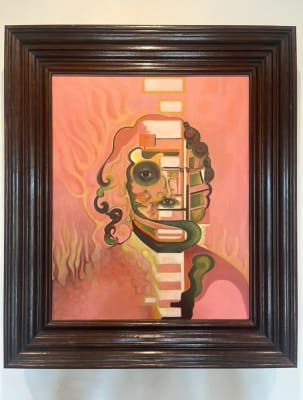
Her current practice explores marginalised voices, particularly those of women, and is steeped in feminism and the power of the feminine. Working across painting, sculpture and installation, she creates experimental work that explores identity, memory, landscape and human experience.
Artist Statement
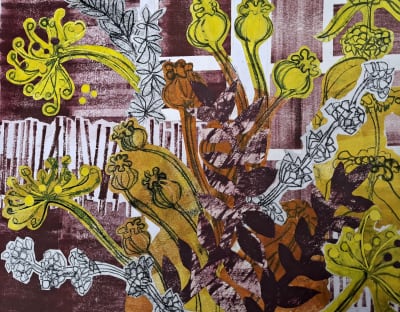
My practice is ever-changing and continually evolving, but at its heart is an exploration of the female body, flora and fauna, and the relationship between them. I am interested in the power of the feminine and in giving visibility to marginalised female voices through the language of the natural world.
I work intuitively across painting, sculpture and installation, combining organic forms, floral imagery and natural fibres with the female figure. These materials become a means of exploring, illuminating and giving form to voices and experiences that have often been overlooked or suppressed.
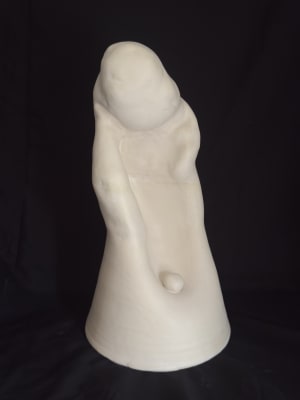
My current work is increasingly drawn towards the female goddess and the ancient relationship between women and the natural world. Through works such as Goddess of the Wilderness and Madonna of the Hedgerow, I celebrate the female form as something organic, powerful and inseparable from the landscape. The work can become a form of protest, but also an act of celebration, reclamation and transformation.